Author: jappe

  • North Sea bloom


    Earth observation image of the week: Sentinel-3 captures a significant algae bloom in the North Sea

  • Earth from Space


    In this week’s edition, Sentinel-3A takes us over the North Sea

  • 'Snow Swamp' on Canada's Lowell Glacier

    'Snow Swamp' on Canada's Lowell Glacier

    Over a mere four days this summer, snow from the previous winter melted into a pond of slush a glaciologist called a “snow swamp.”

  • Solar power


    Operations image of the week: a soft Tuscan sunset hints at the presence of the powerful Sun beneath the horizon, a star that can affect satellites in orbit and critical civil infrastructure on Earth

  • Next stop – space


    Do you have a great idea for new space transportation services – to space, around space or returning? Send it in this week and create a commercial success with advice from ESA

  • Aeolus laser shines light on wind

    Following the launch of Aeolus on 22 August, this extraordinary satellite’s instrument has been turned on and is now emitting pulses of ultraviolet light from its laser, which is fundamental to measuring Earth’s wind. And, this remarkable mission has also already returned a tantalising glimpse of the data it will provide.

  • Along the Way to Launch Pad 39B

    Along the Way to Launch Pad 39B

    A truck sprays water to reduce the dust as NASA’s crawler-transporter 2 with the mobile launcher atop moves slowly along, on its trek to Launch Pad 39B.

  • Watch the skies


    Technology image of the week: this fireball-detecting camera is mounted at the highest point of ESA’s technical centre in the Netherlands

  • Emergency training


    Human and robotic spaceflight image of the week: Alexander Gerst during safety drill on the International Space Station

  • Summer Ship Tracks in the Pacific

    Summer Ship Tracks in the Pacific

    Long, narrow clouds, known as ship tracks, stood out against the backdrop of marine clouds blanketing much of the North Pacific Ocean.

  • We have opend HTV Small Re-entry Capsule web page

    Last Updated: September 5, 2018

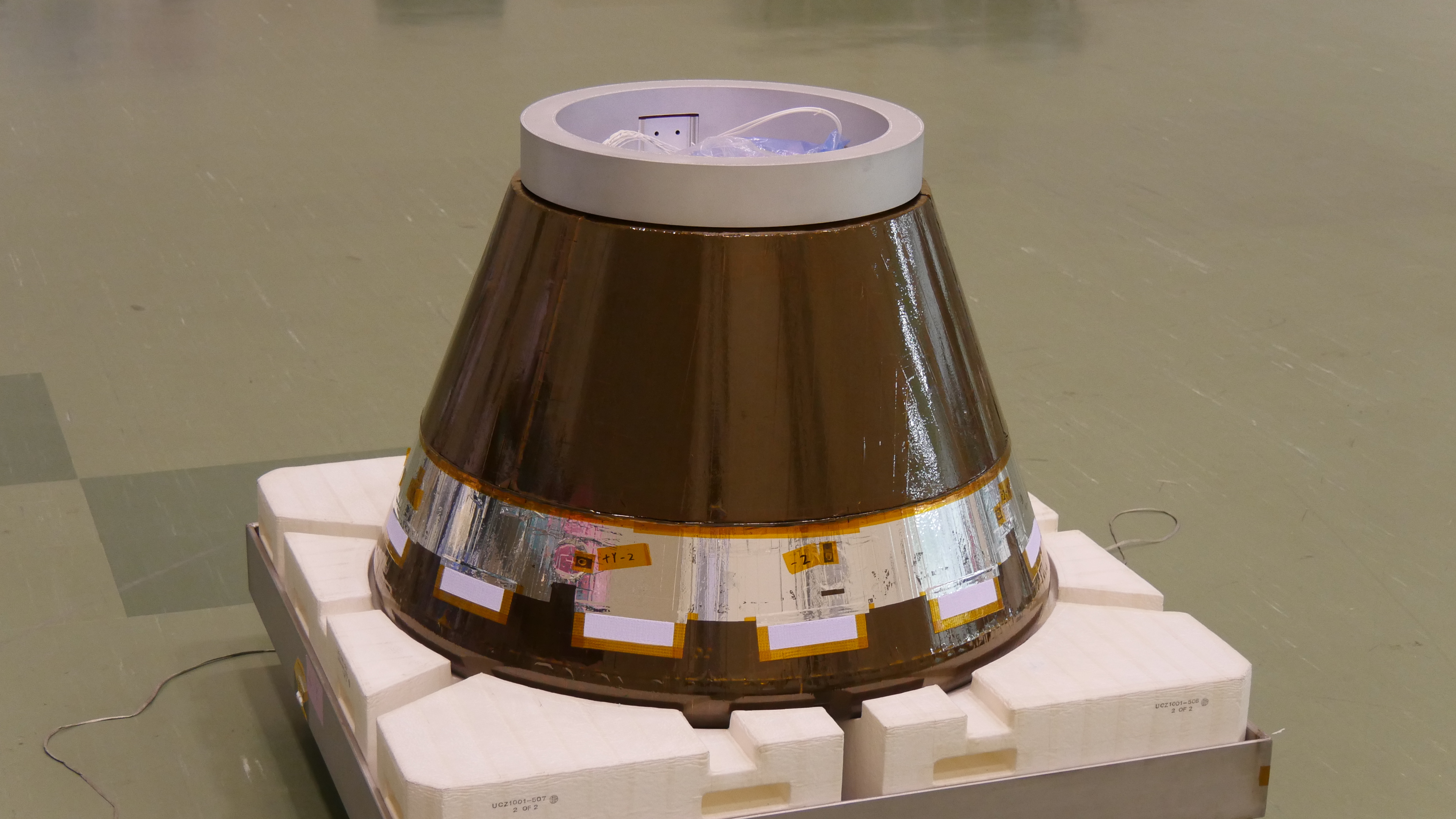
    HTV Small Re-entry Capsule

    HTV Small Re-entry Capsule
    (Credit: JAXA)

    In the mission of HTV7 (“KOUNOTORI 7”), after completing the re-supply mission to ISS, HTV7 will demonstrate the novel technology for recovering experiment samples from ISS, which Japan has not obtained up until now, by taking advantage of the opportunity of re-entry into Earth with the HTV Small Re-entry Capsule (HSRC) that will be loaded on the HTV for the first time ever.


    HSRC mission

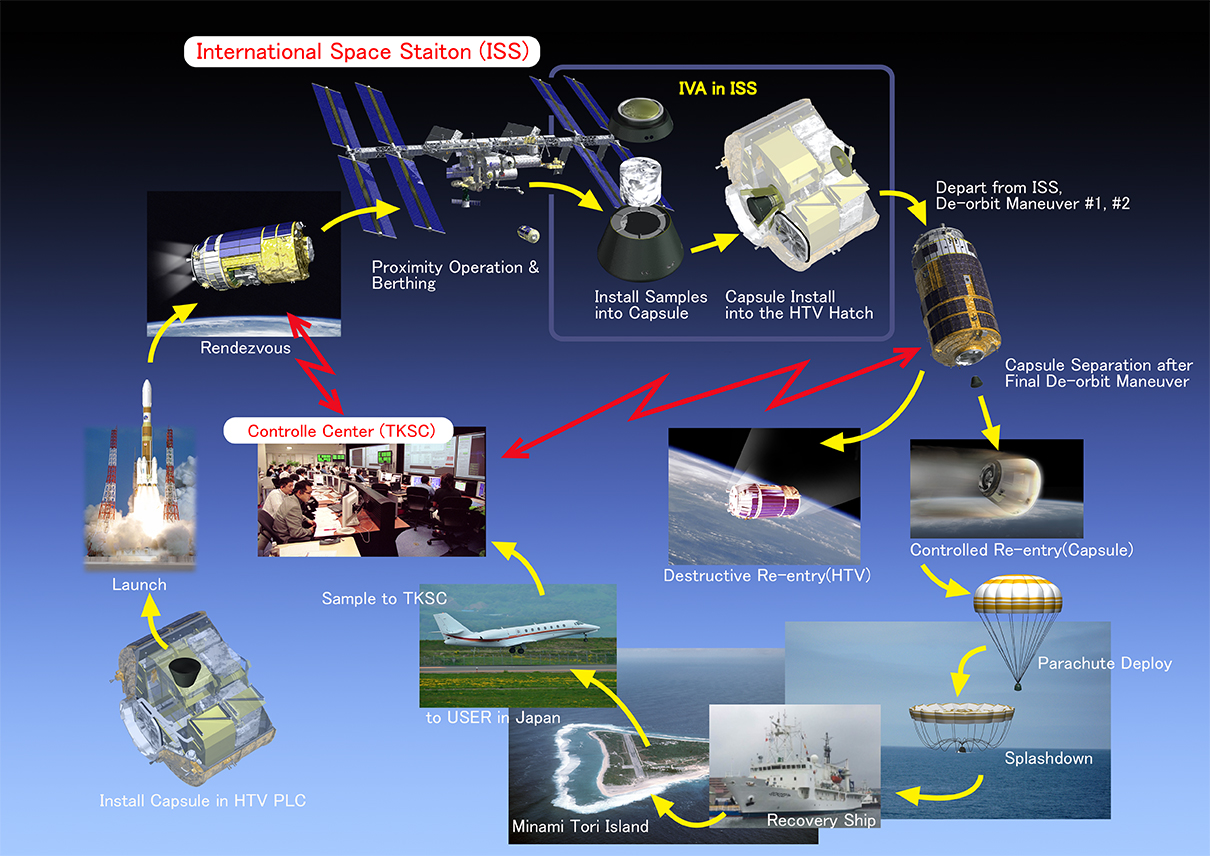
    The HSRC with experiment samples on board will be attached onto the hatch of the Pressurized Logistic Carrier (PLC) of the HTV7 before the HTV7 departs (un-berthed) from ISS. After the HTV7 deorbit burn finished, the capsule will be released from the PLC by the command from the ground and re-enter into Earth’s atmosphere, and subsequently descend on a parachute. The capsule will be recovered from the ocean after splashdown.

    Conceptual diagram of HSRC operations (Credit: JAXA)

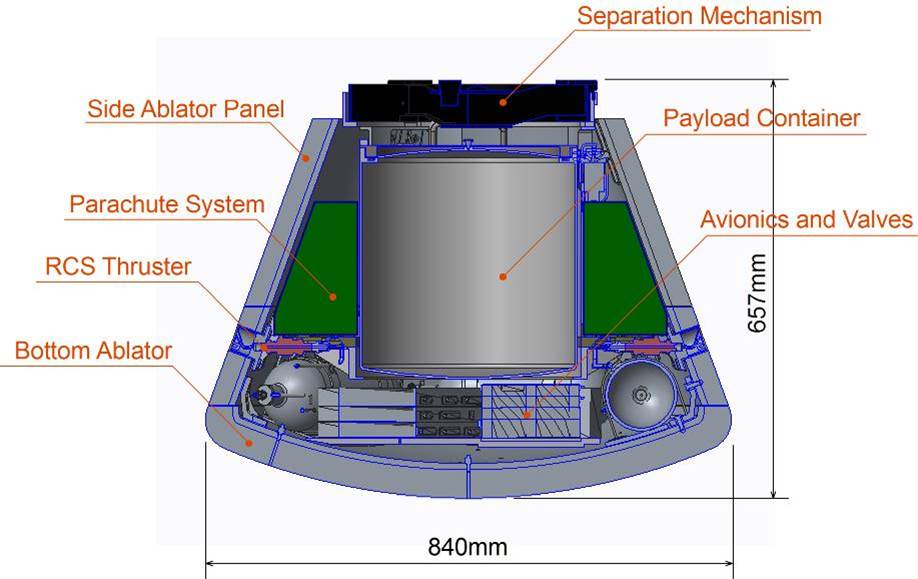
    HSRC and its payload container overview

    The HSRC aboard HTV7 “KOUNOTORI7”, where samples will be kept cool in a passive way (no electric cooler), houses a vacuum double layer insulation container (thermos bottle) and a heat storage unit (refrigerant), inside of which experiment samples will be stored.

    写真

    Cross section image of HSRC (Credit: JAXA)

    写真

    Configuration of HSRC and payload container (Credit: JAXA)

    Installation of HSRC

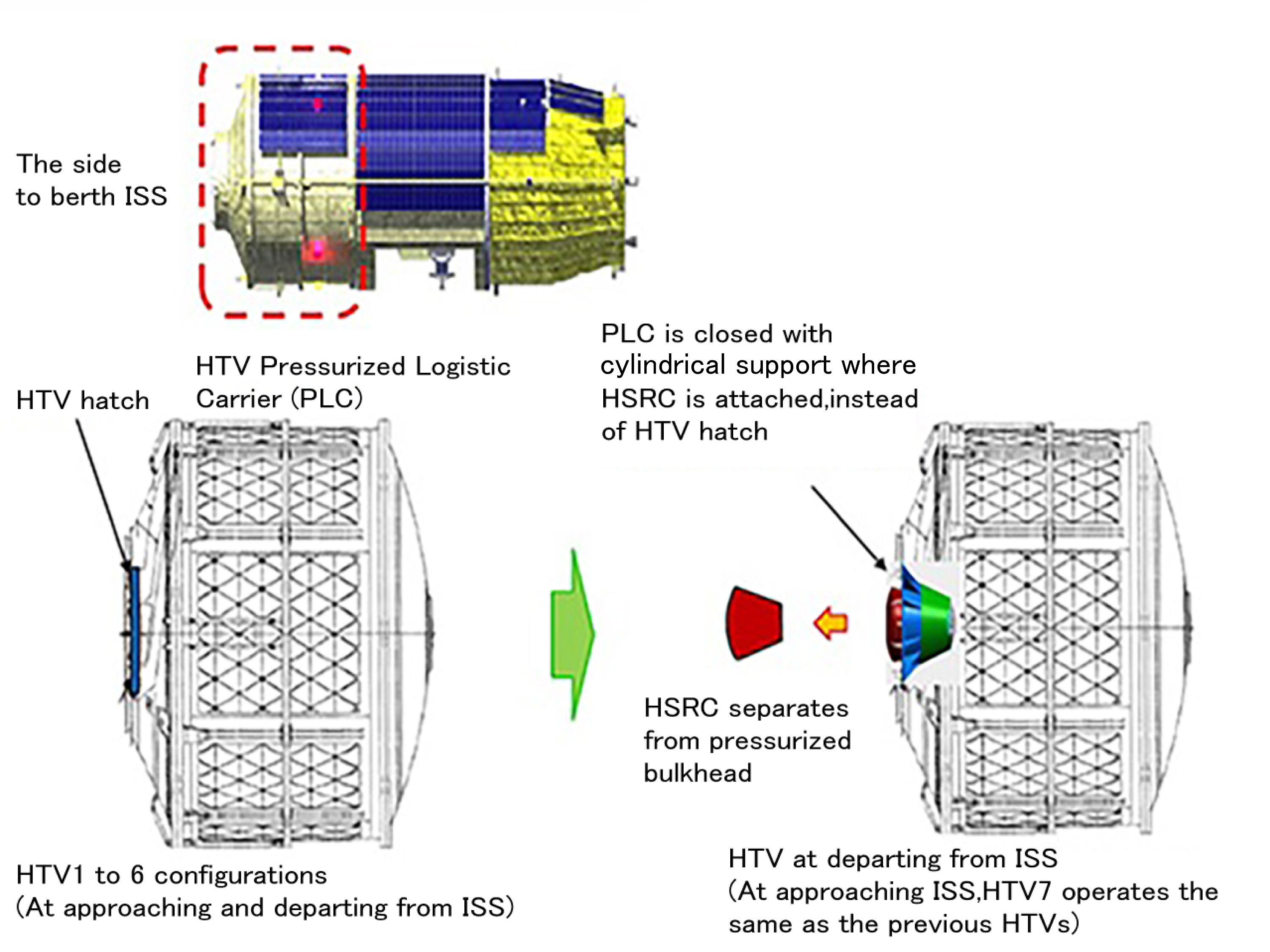
    Before the HTV7 departs from ISS, the crew will load an HSRC-exclusive structure (cylindrical support) onto the hatch at the entry of the Pressurized Logistic Carrier for air tightness (while the hatch of the HTV7 is left open).
    Onto the structure, the HSRC with the separation mechanism attached will be fixed.

    After completing the de-orbit maneuver, the HTV7 will operate the separation mechanism of the HSRC according to the command received from the ground to separate the HSRC from the vehicle.

    Conceptual diagram of installing HSRC aboard HTV (Credit: JAXA)

    The HSRC will re-enter Earth’s atmosphere in a guided lift flight, deploy a parachute, and splash down into the sea, which in turn be picked up by Recovery Ship.
    Experiment samples taken out from the HSRC will be loaded onto an airplane on Minamitori Island, immediately delivered to the mainland of Japan (The HSRC itself will remain aboard the recovery ship to be delivered to the mainland).

    Let’s block ads! (Why?)

  • We have opened the HTV7 payload web page

    Last Updated: September 5, 2018

    HTV7 Payload

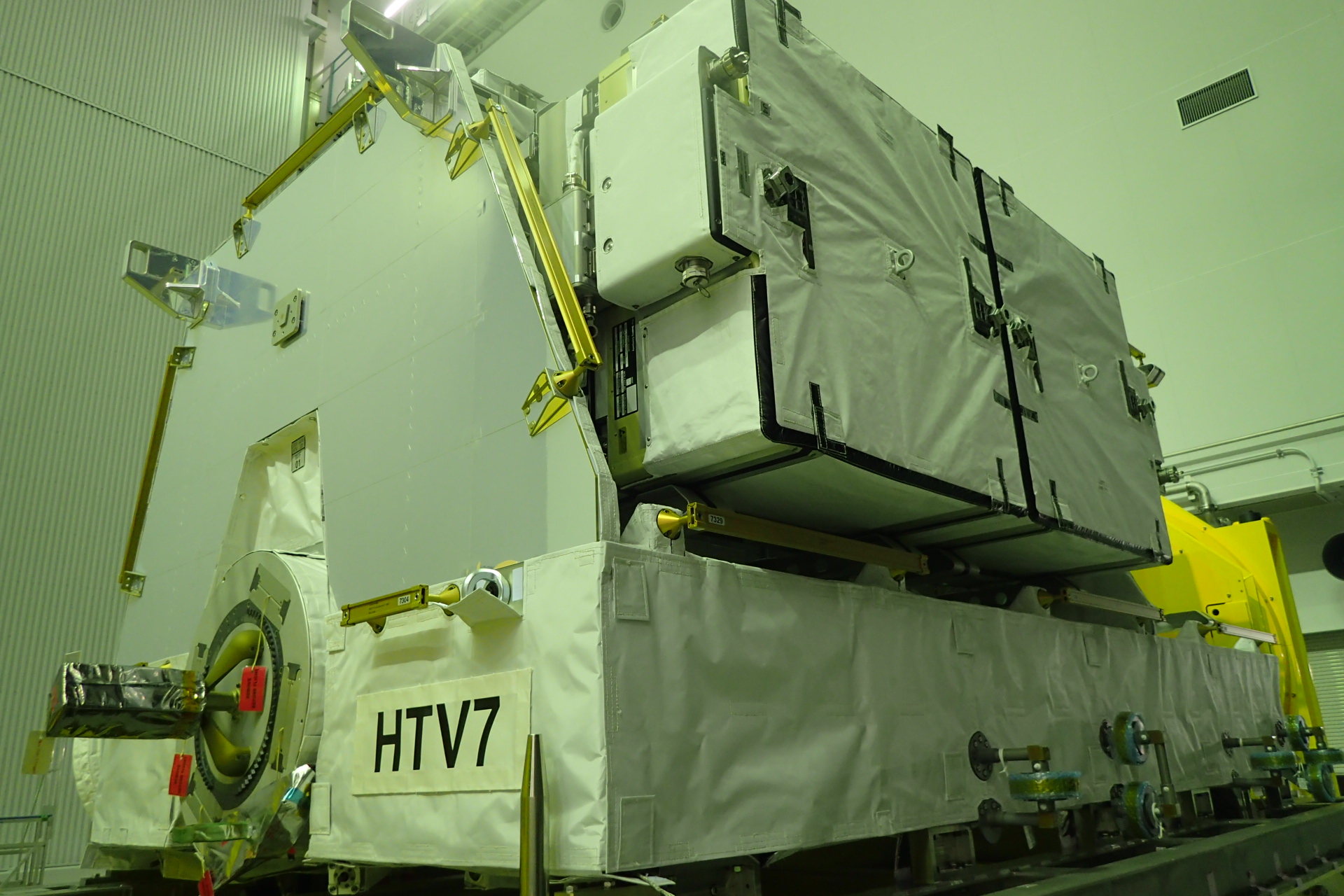
    HTV7 “KOUNOTORI7” delivers a total of 6.2 metric tons of cargo to the ISS, including 4.3 metric tons in the Pressurized Logistic Carrier (PLC) and 1.9 metric tons on the Unpressurized Logistic Carrier (ULC).

    Major supply goods to be delivered on board are as follows:

    * Images below are provided by JAXA unless otherwise specified.

    Cargo in the pressurized Logistic Carrier (PLC)

    Experiment racks

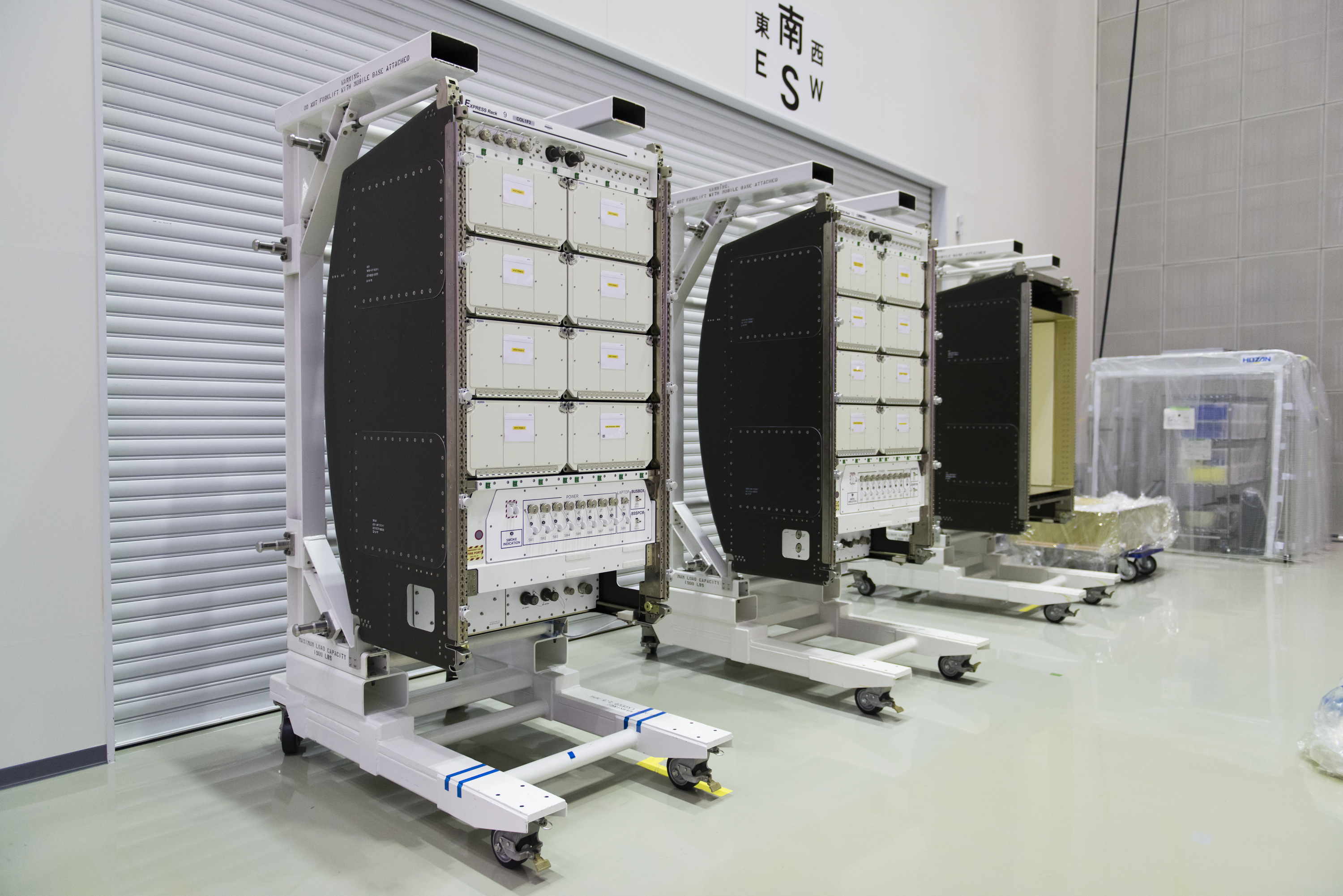
    Two US experiment racks (Express Rack 9B and 10B)
    EXPRESSラック9B、10B(手前の2台)

    EXPRESS Rack 9B and 10B (Two in the forefront)

    US EXPRESS Racks 9B and 10B will be delivered on this flight. These two EXPRESS Racks are modified for more simple interfaces.


    US Life Sciences Glovebox (LSG)
    ⽶国⽣命科学グローブボックス(LSG)

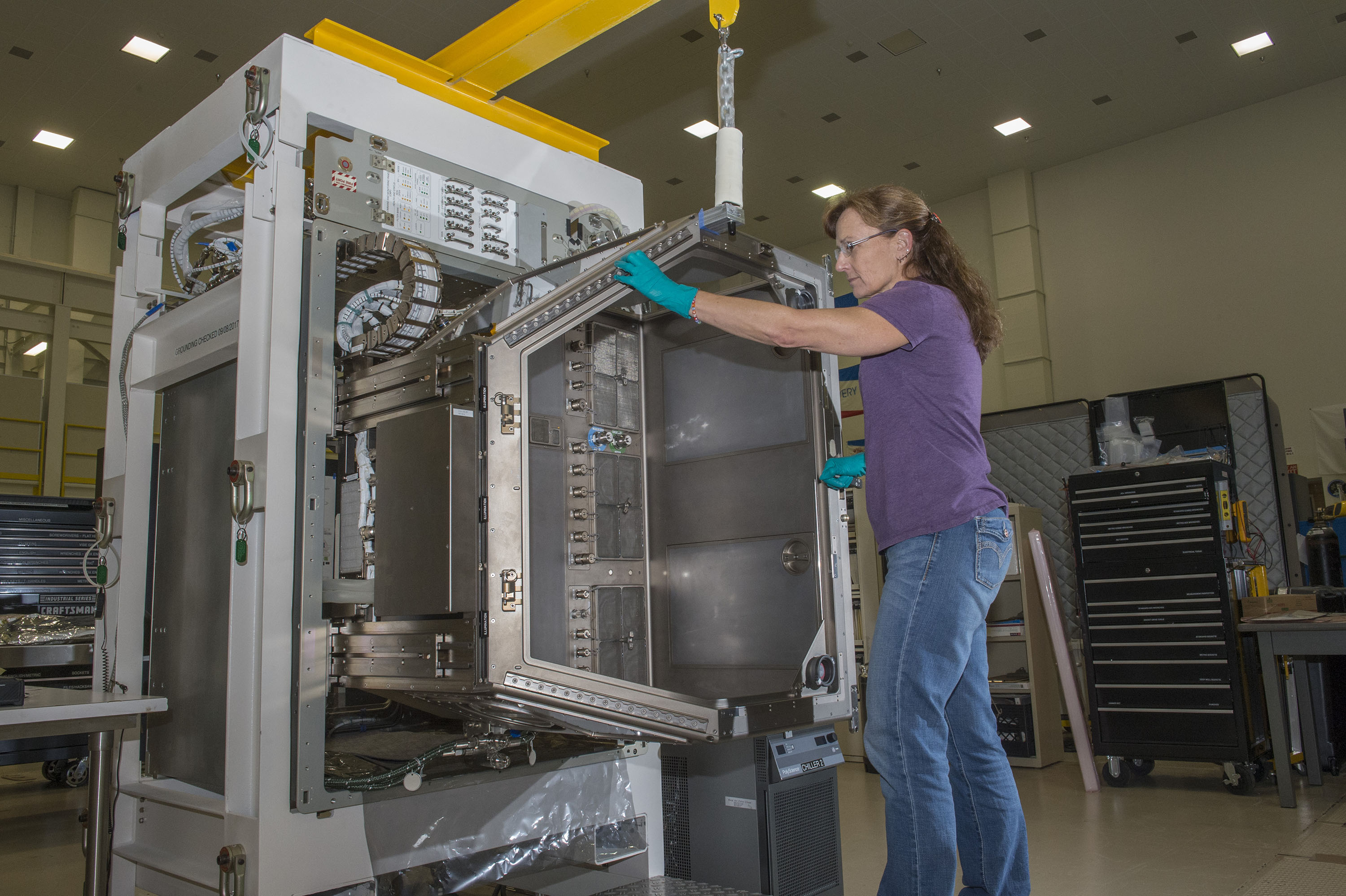
    Life Sciences Glovebox (LSG) (Credit: JAXA/NASA)

    Life Sciences Glovebox (LSG), the second ISS large-scale glovebox for scientific experiments, will be installed on board “Kibo”.


    Life Support Rack (LSR)
    ESA生命維持ラック(LSR)

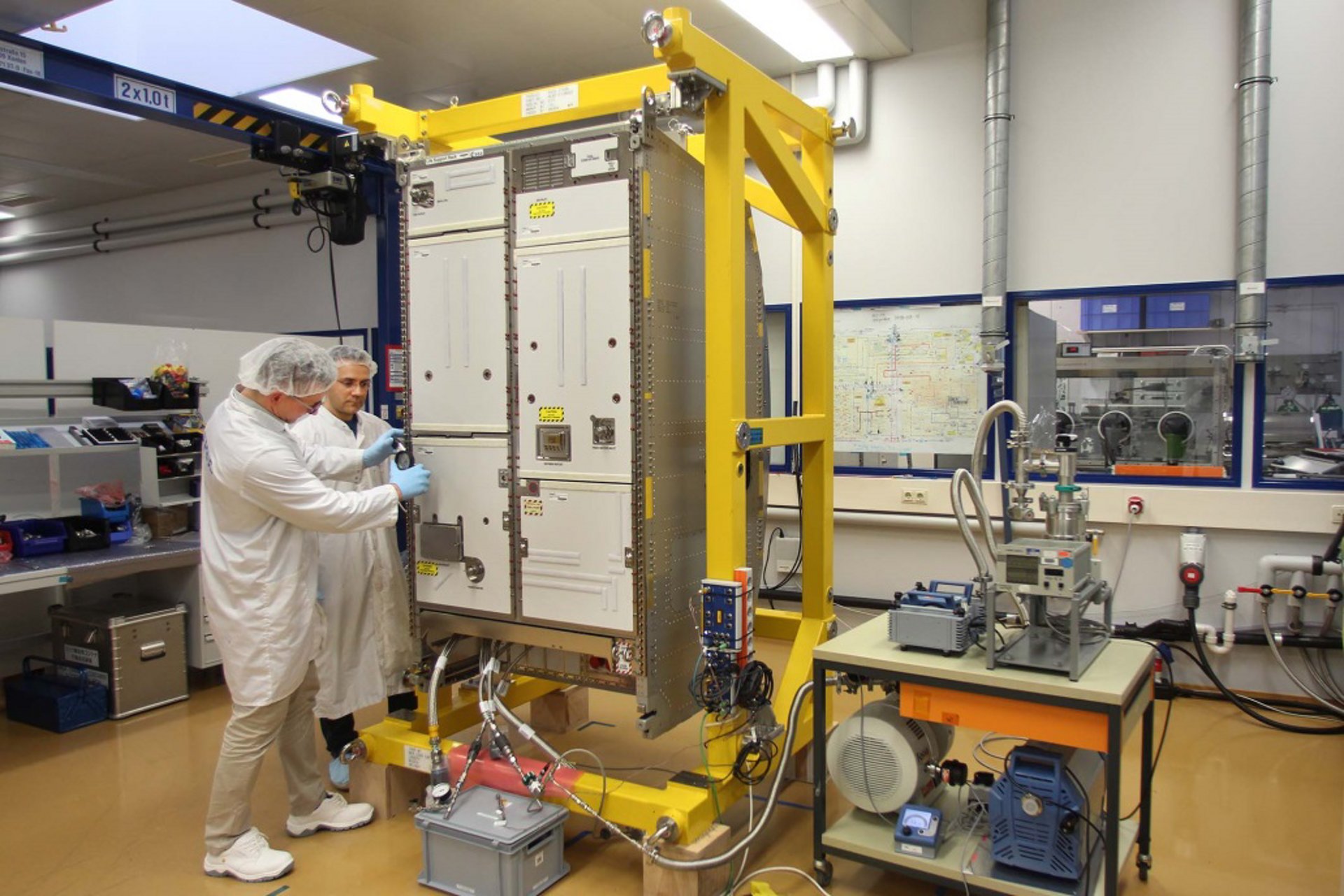
    ESA Life Support Rack (LSR)(Credit: Airbus Company)

    The Life Support Rack (LSR) developed by the European Space Agency (ESA) is equipment for demonstration test of effective life support system which produces oxygen (O2) from water (H2O) by using electrolysis and also converts the produced hydrogen (H2) in Sabatier reaction with carbon dioxide (CO2), removed from the inside of the cabin, into methane (CH4) and byproduct water (H2O), which is then recycled for electrolysis.
    Utilization/experiment-related items

    HTV Small Re-entry Capsule (HSRC)
    HTV搭載小型回収カプセル

    HTV Small Re-entry Capsule (HSRC)

    HTV Small Re-entry Capsule (HSRC) will demonstrate reentry technology and cargo recovery function from the ISS.

    HSRC including experiment samples will be attached to the hatch of the Pressurized Logistic Carrier (PLC) before the HTV7 unberthing from ISS. HSRC will be separated from the HTV7 after its deorbit burn; re-enter Earth’s atmosphere; descend by parachute; and be recovered after splashdown.

    【Reference】 HTV Small Re-entry Capsule (HSRC)

    Loop Heat Pipe Radiator (LHPR) technology demonstration system
    ループヒートパイプラジエータ(LHPR)

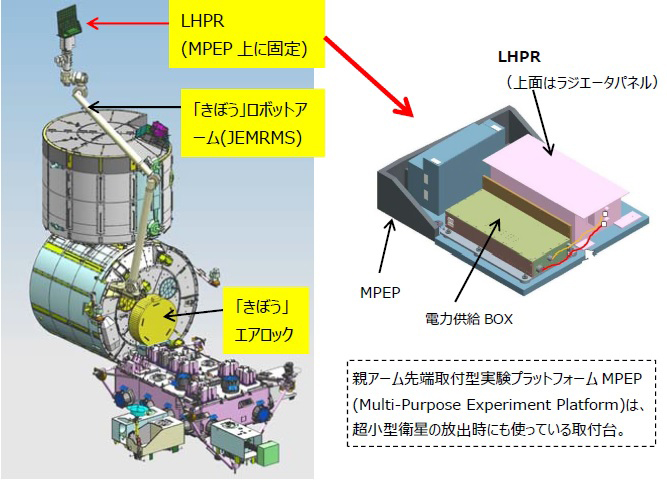
    Loop Heat Pipe Radiator (LHPR)

    The Loop Heat Pipe is expected for high efficiency heat rejection technology for future spacecraft. This Loop Heat Pipe Radiator (LHPR) demonstration will perform on-orbit technology demonstration of an expansion-type radiator equipped with a loop heat pipe by using “Kibo” as a test bed environment.

    The demonstration aims to reduce risks in satellite development by reflecting the results obtained by the on-orbit demonstration to the design of the expansion-type radiator, which will be applied to Engineering Test Satellite-9 aimed at the realization of next-generation geostationary communications satellites.


    JEM Small Satellite Orbital Deployer (J-SSOD) and CubeSat
    小型衛星放出機構(J-SSOD)

    JEM Small Satellite Orbital Deployer (J-SSOD)

    This mission will mark the 10th CubeSat deployment using J-SSOD since 2012.

    【Reference】CubeSats which have been deployed until now


    CubeSat

    HTV7 will deliver following CubeSats developed by a joint team of Nanyang Technological University (NTU, in Singapore) and Kyushu Institute of Technology (“Kyutech”, in Japan), general incorporated association Rymansat Spaces, and Shizuoka University.

    • SPATIUM-I (Kyushu Institute of Technology/Nananyang Technological University)
    • SPATIUM-I(サイズ:2U)

      SPATIUM-I (2U sized)

      The CubeSat will perform a mission to demonstrate technology aimed at electron density measurement and three-dimensional mapping of ionosphere and chip scale (ultra-small) atomic clock for CubeSats.


    • The CubeSat will perform a mission to demonstrate technology aimed at electron density measurement and three-dimensional mapping of ionosphere and chip scale (ultra-small) atomic clock for CubeSats.
    • RSP-00(サイズ:1U)

      RSP-00 (1U sized)

      The CubeSat will demonstrate technology for imaging with onboard camera and high speed data transmission.


    • STARS-Me (Shizuoka University)
    • STARS-Me(サイズ:2U)

      STARS-Me (2U sized)

      The CubeSat will perform small-scale demonstration of space elevator, which is a demonstration mission of configuration of two satellites and a climber (moving mechanism).


    Caqo for the onboard crew

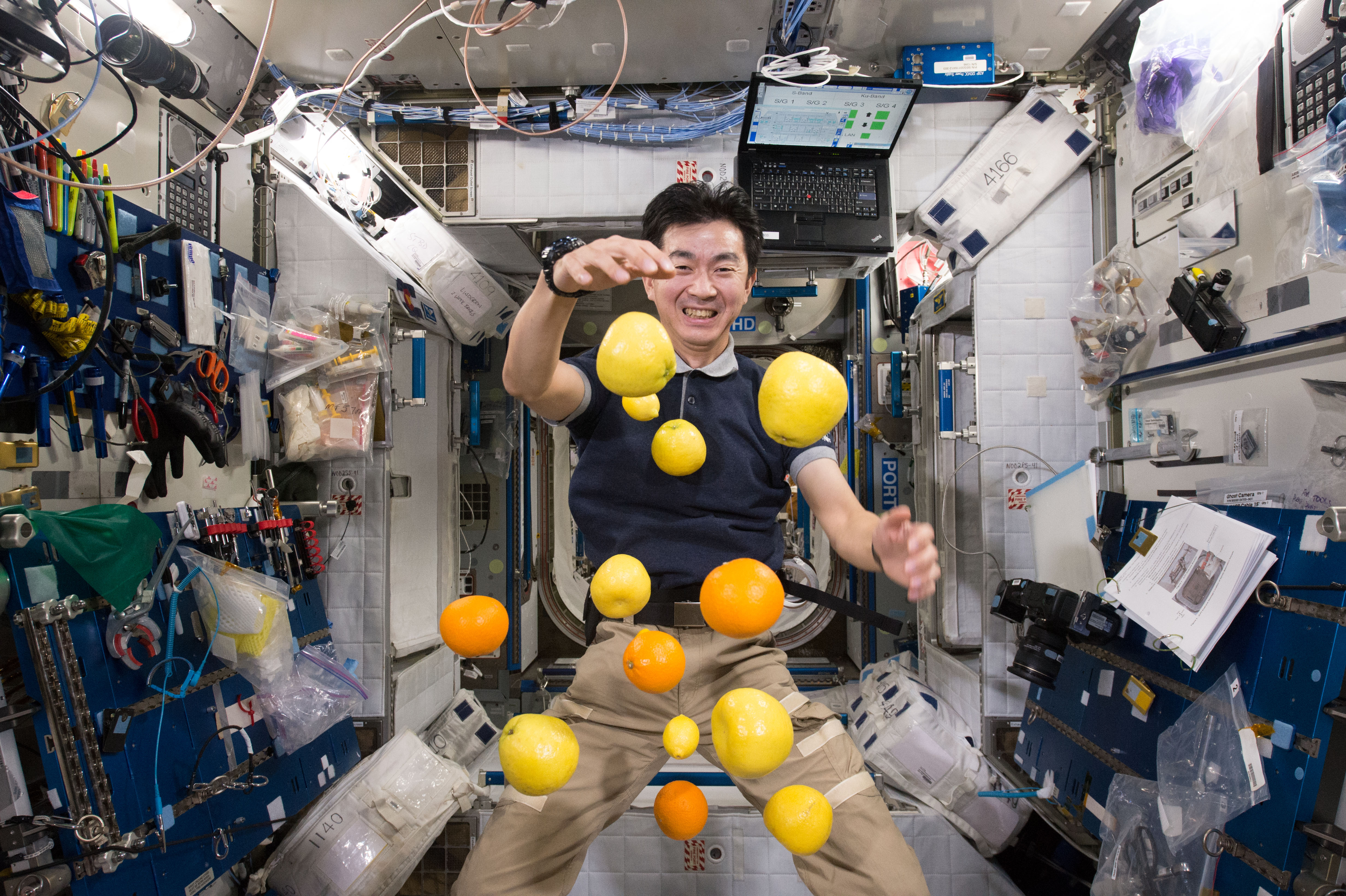
    Fresh food
    「こうのとり」5号機で運ばれた生鮮食品

    Fresh food delivered by HTV5 “KOUNOTORI5”

    Following HTV5 and HTV6, HTV7 will also deliver foods and other supplies including Fresh food.


    Cargo on the Unpressurized Logistic Carrier (ULC)

    ISS battery Orbital Replacement Units (ORUs)
    バッテリを搭載した曝露パレット

    Exposed Pallet (EP) loaded with battery ORUs

    Following the HTV6, the HTV7 (and also HTV8 and HTV9) will deliver new lithium ion batteries for ISS on the Exposed Pallet (EP) on the Unpressurized Logistic Carrier (ULC). New six battery Orbital Replacement Units (ORUs) consisting of new lithium-ion battery cells manufactured by a Japanese company are delivered.

    The nickel-hydrogen batteries currently used on the ISS are becoming old. The extension of ISS operations becomes possible with the supply of Japanese lithium-ion battery cells. Only the HTV is capable of delivering six battery ORUs at one time, and thus plays an important role in continuous ISS operations.

    Let’s block ads! (Why?)

  • Making space exploration real – on Earth

    You are on a rock speeding through space. On this rock called Earth every single mineral tells you something about planetary formation. This week astronauts and space engineers will unlock the mystery of those minerals as they start an ESA geology field training course to prepare for future exploration of the Moon, Mars and asteroids.